
Read Story: SEASON 1 EPISODE 4
The Poor Widow Episode 4
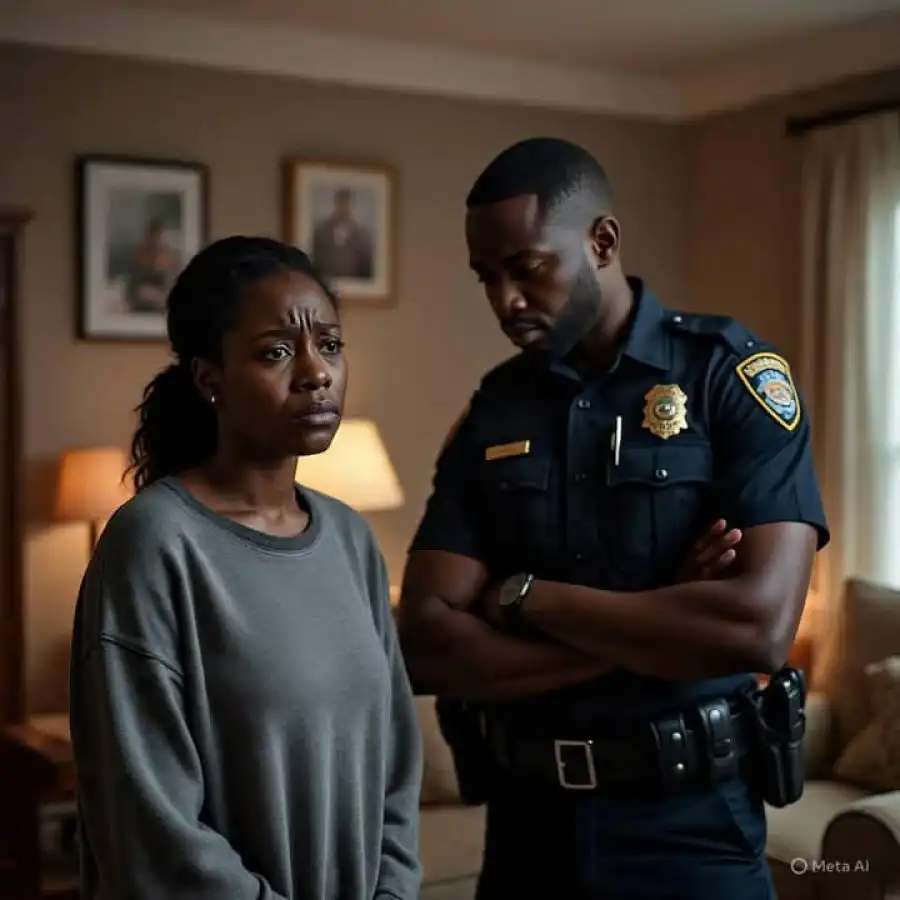
Jecintha remained in detention as the days passed slowly. Each hour felt like a full day. She was weak, hungry, and afraid. Her body had started to ache all over, and her eyes looked tired and empty. The third day passed, and she had not heard anything from the DPO. She hoped maybe he had changed his mind and forgotten about her. But on the morning of the fourth day, an officer came to the cell and said, “Oga wants to see you.” Jecintha stood up slowly. Her legs were shaking. She had no idea what was waiting for her.
Inside the DPO’s office, the man sat with a thick brown file on his table. He didn’t smile this time. He opened the file and brought out a sheet of paper. “This is your case file,” he said. “You are being charged with armed robbery. If you are found guilty, you could spend several years in prison.”
Jecintha looked at the paper, confused. “But I didn’t steal anything,” she said. “I didn’t even enter the shop.” The DPO raised one hand. “I’m not here to argue. I’m here to give you your final chance. Say yes, and this file disappears forever.”
Jecintha swallowed hard. Her chest felt heavy. She had already refused him once. But now, it felt different. The document looked real, and the words the DPO spoke sounded serious. He leaned forward and said, “If you go to prison, your children will suffer. Who will feed them? Who will protect them? They might even die on the streets.” That broke Jecintha’s heart. She imagined her children roaming the streets alone, begging for food, being harmed by strangers. She couldn’t take it. Her body began to shake. “Please… is there no other way?” she asked with a trembling voice.
The DPO stood up and walked around the table. “You are a woman. A mother. Do the right thing for your children. Nobody will know. I will take care of all of you. You’ll sleep in a clean bed, eat good food, and your children will go back to school. But only if you agree.” His words entered her ears like a whisper, but they hit her heart like a hammer. Jecintha turned her face away. She had promised herself she would never give in. But this man was playing with her fears. He knew her weakest point—her children.
Tears rolled down her cheeks. She didn’t want to do it. She felt dirty already, just hearing those words. But she had to think about her children. She hadn’t seen them in days. She didn’t know if they were safe or alive. Maybe this was the only way to be with them again. She took a deep breath and nodded slowly. “Okay,” she said quietly. “I agree.” The DPO smiled. “Good decision. You’ll thank me later.” He picked up his phone and called his boys. “Go to the market and find those children. Bring them straight to my house.”
That same afternoon, two police officers went into the market with a photo of Junior. Luckily, someone recognized him and pointed out where he and the others were hiding. They were found behind a shop, hungry and tired. When they saw the police, they were scared, but the men promised they were taking them to their mother. They followed without argument. The officers took them to the DPO’s house and fed them small snacks. Later, a policewoman came to the cell and said, “Your children are waiting for you.” Jecintha’s heart jumped. It was like she had been revived.
As they drove to the DPO’s house, Jecintha kept looking out of the window. She didn’t speak. She didn’t smile. She only thought of one thing—her children. When they arrived, she saw them sitting quietly under a mango tree in the compound. The moment they saw her, they ran to her, crying and calling “Mummy!” over and over. She hugged them tightly. Her tears soaked their faces. For a few seconds, the pain disappeared. She felt like a mother again. But deep down, she knew what she had agreed to. That joy was mixed with deep sorrow.
The DPO came out of the house, still smiling. “Welcome,” he said. “This is your new home.” He ordered the housekeeper to prepare food for the children. Jecintha followed him inside slowly. Her body was tired, but her heart was heavier. As she stepped into the living room, she looked around. The house was big and beautiful, but it felt like a prison to her. The DPO turned to her and said, “I’ve kept my own side of the deal. Now, it’s your turn.” She nodded quietly. “I did it for my children,” she whispered to herself in shame.
That night, after the children had eaten and gone to sleep, Jecintha sat on the edge of a bed in one of the rooms. Her hands trembled. Her heart beat fast. She didn’t feel safe. She felt like a prisoner who smiled during the day and cried at night. “Is this how my life will be?” she asked herself. But she didn’t cry. She was too tired to cry. The DPO entered the room later. She stood up, not knowing what to say or do. “You’ll get used to this,” he said. But Jecintha knew she would never get used to it.
She lay on the bed that night, staring at the ceiling, unable to sleep. The children slept in the next room peacefully. That was her only comfort. “I did it for them,” she repeated again and again. “I did it because I love them.” But a part of her felt like she had lost herself. She had entered into something she couldn’t run away from. And even though the roof above her was fine and the bed was soft, her heart remained broken, and her spirit was still trapped. Peace had not come—only silence.
To be continued
{{comment.anon_name ?? comment.full_name}}
{{timeAgo(comment.date_added)}}
{{comment.body}}
{{subComment.anon_name ?? subComment.full_name}}
{{timeAgo(subComment.date_added)}}
{{subComment.body}}