
Online Gaming is an Untapped Goldmine in the MENA Region
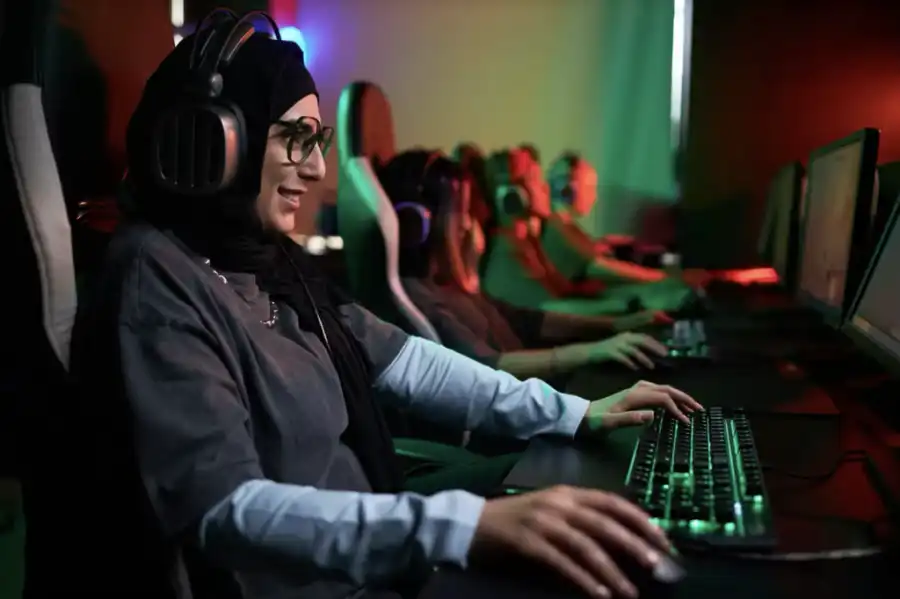
Online Gaming is an Untapped Goldmine in the MENA Region
Stakeholders across numerous different industries eager are eager to tap into the lucrative online gaming landscape.
The Middle East and North Africa (MENA) region is ripe for expansion. Its tech-savvy population and strong government backing make it a major investment opportunity for foreign companies.
If it continues on the same trajectory in the coming years, there is no doubt that MENA will become a global leader in the gaming industry.
Digital Tokens, Play-to-Earn & Crypto Gaming in MENA
The rise of digital tokens, powered by blockchain tech and Play-to-Earn models, could be big news in the MENA region.
Play-to-Earn has changed the basic idea of what it means to play video games, offering players the chance to earn items or rewards that have real-world value.
This has been made possible by blockchain technology, which turns in-game items, such as characters, outfits, land or tools, into digital assets or non-fungible tokens (NFTs).
These assets belong to the player, not the publisher, meaning they can be traded, sold or held like any other digital property.
Digital tokens, such as cryptocurrencies, have also contributed to the rapid rise of the gaming sector and the associated iGaming industry in the MENA region.
While regulations differ widely across each nation, the best Arab casinos online featured on comparison platform haz-tayeb.com operate under licenses issued in other jurisdictions.
The connection between gaming and digital finance has helped to normalise the use of blockchain tech in the iGaming sector across the MENA region.
Players who first encounter crypto through games often go on to explore other services, with gaming serving as an entry point into the wider digital economy.
How AI is Reinventing the Gaming Experience across MENA
Artificial intelligence (AI) has also played a massive role in the rapid rise of the gaming sector across the MENA region, and that trend is expected to continue.
The tech has turned games from a fixed experience into something fluid and personal, which significantly increases their replay value.
The game can react to what you do, remember your choices and change the story or world based on your decisions. That means no two play sessions have to feel exactly the same.
Instead of scripted characters repeating the same lines, AI makes them feel more natural and responsive. Game worlds can be created faster, environments can look more detailed and stories can unfold in different ways each time you play.
It gives players the ability to chart their own course and write their own stories, rather than following a generic script every time they play their favourite games.
The integration of AI into game development has been a game-changer for developers in MENA. Creating high-quality games was previously capital-intensive, time-consuming and required large teams.
However, AI tools have reduced cost and sped up development, allowing smaller studios and individual creators to bring their ideas to life and giving them a fair chance at upsetting the apple cart.
Localising Playable Content
The localisation of playable content is a significant factor in the MENA region. It’s about developers redesigning parts of games, so they reflect local culture, humour, places and stories.
When that is done well, it creates experiences that feel authentic, familiar and emotionally resonant. It also makes players feel like the games were made specifically for them rather than a knock-off version of a foreign publisher’s work.
This matters in MENA because many players grew up playing games designed primarily for other audiences, with characters, settings and references that don’t reflect their own experiences.
Localisation helps to fill that void, and the market for its services reflects its growing importance.
Valued at around $2.5 billion in 2024, localisation services are expected to reach $7.1bn by 2033 at a compound annual growth rate (CAGR) of 12.5% from 2026 to 2033.
That’s because companies and video game developers are now realising that global success depends on how relevant their titles are to the local audience.
As the number of gamers around the world continues to rise, developers are starting to realise they can no longer afford to stick with the previous one-size-fits-all experiences.
{{comment.anon_name ?? comment.full_name}}
{{timeAgo(comment.date_added)}}
{{comment.body}}
{{subComment.anon_name ?? subComment.full_name}}
{{timeAgo(subComment.date_added)}}
{{subComment.body}}